
1. Open the Subjective Assessment
From the current client consultation, open the Subjective Assessment section. Review any relevant information already available in the client’s record before entering the information for the current consultation.
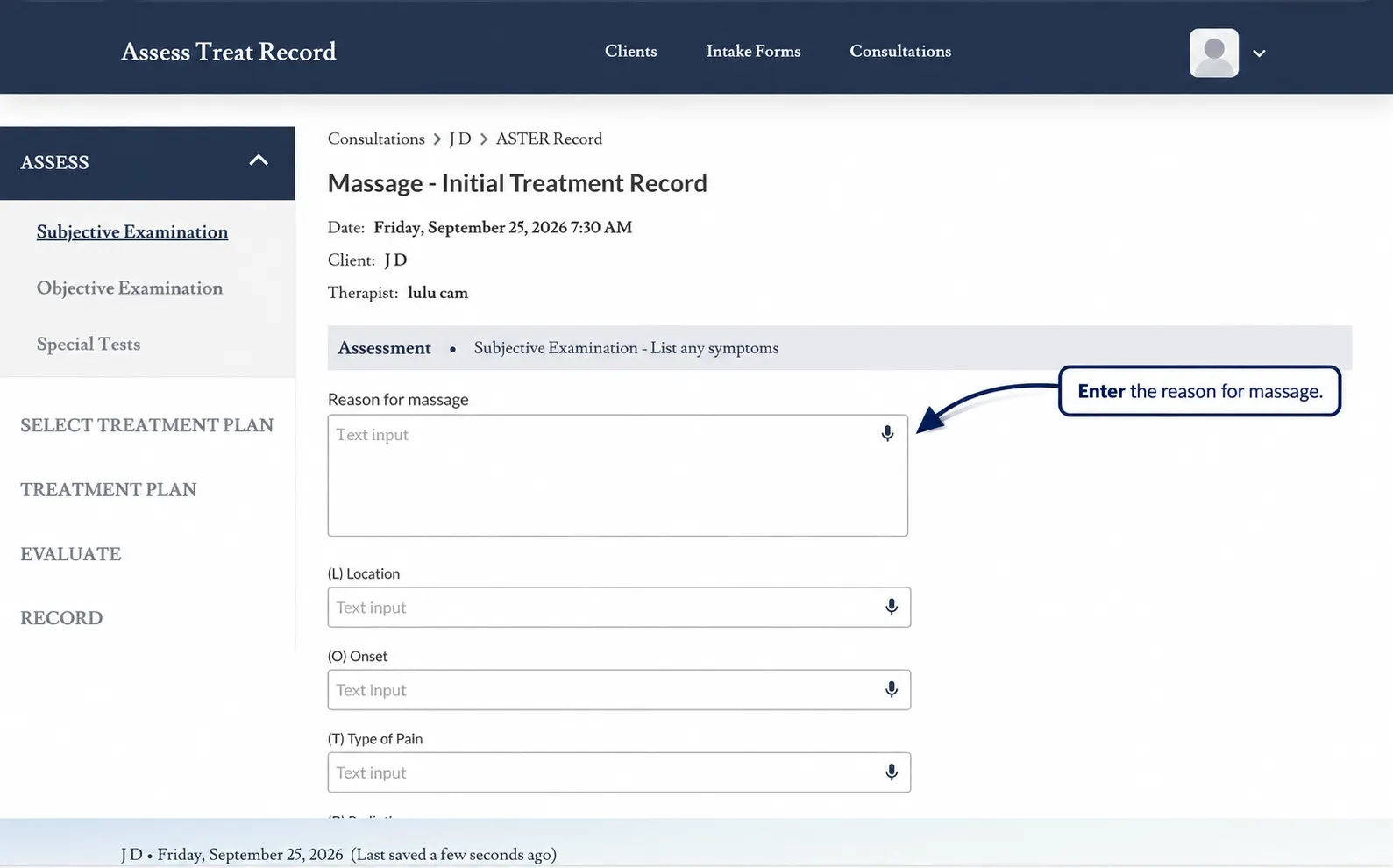
2. Record the Client’s Reason for Treatment
Record why the client has attended for treatment and the main concerns they would like addressed during the consultation.
Use clear, relevant clinical wording while accurately reflecting the information provided by the client.
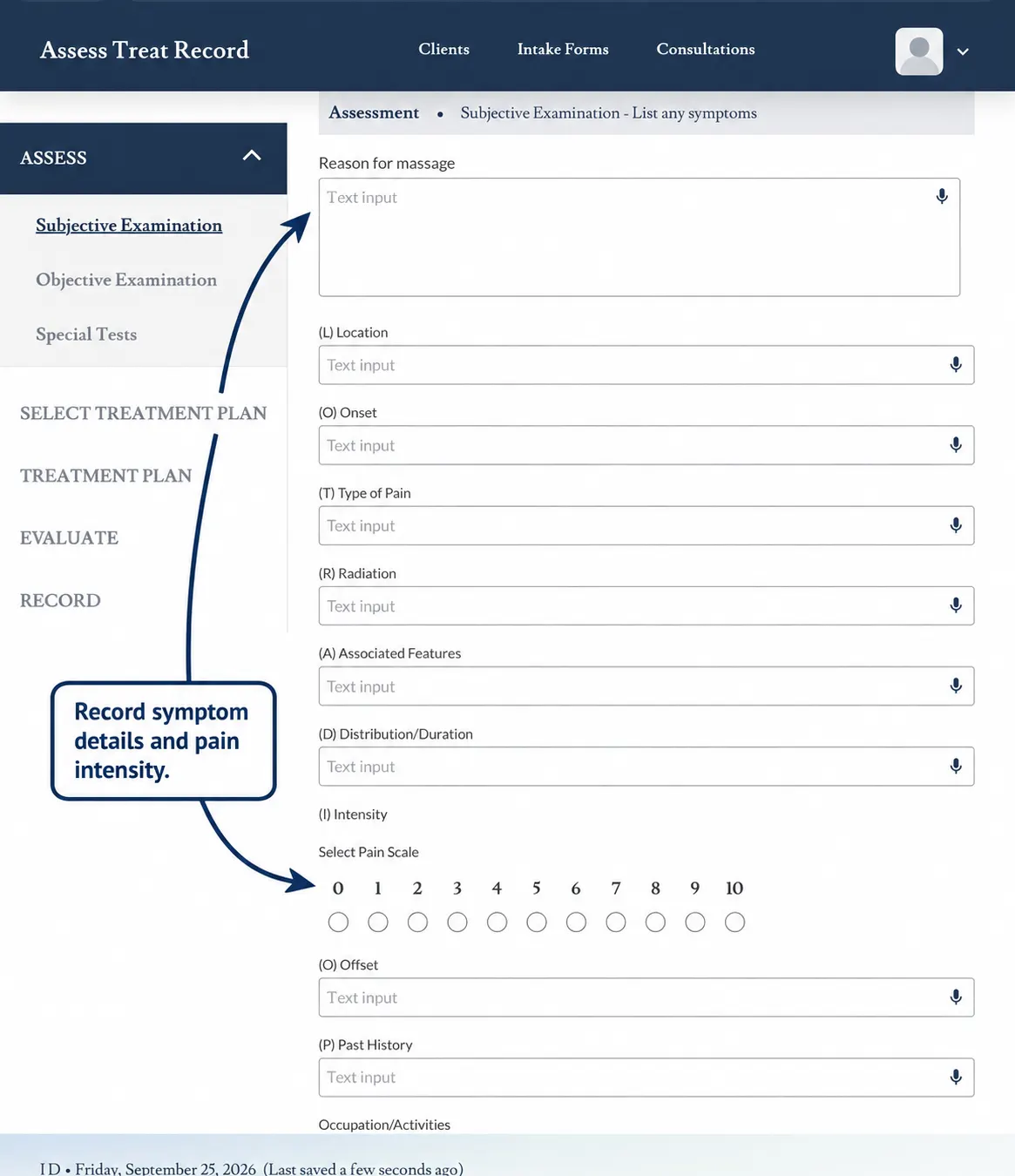
3. Record Relevant Subjective Information
Document the information that is relevant to the client’s current presentation and treatment. Depending on the consultation, this may include information such as:
- Location of symptoms or areas of concern
- How the client describes their symptoms
- Activities or movements that affect the presentation
- Changes since the previous treatment
- Relevant treatment goals
This is not a mandatory checklist — not every item needs to be recorded for every client.
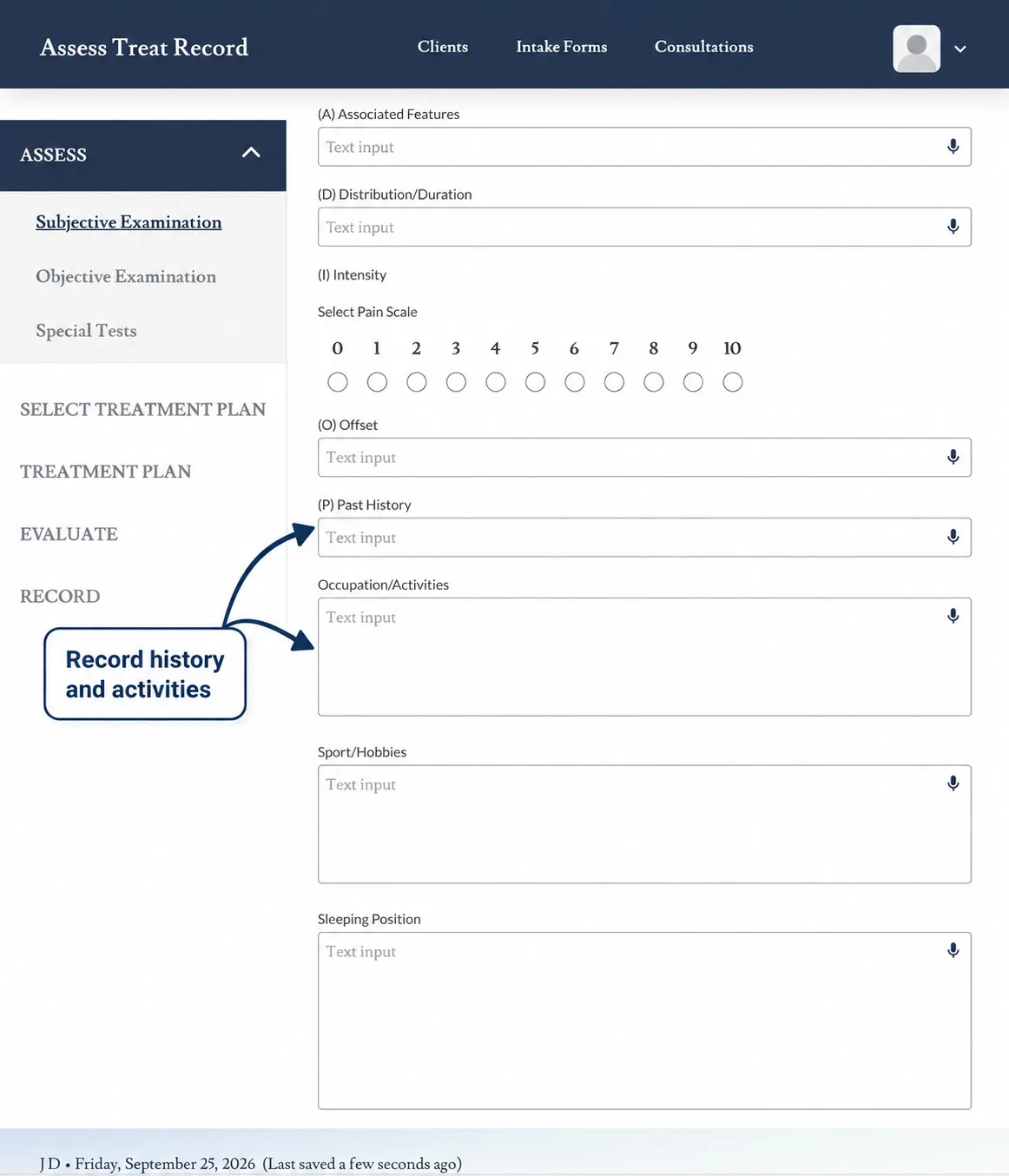
4. Use Speech-to-Text if Helpful
Where available, speech-to-text can be used to help record subjective information without typing every detail manually.
Review dictated text before continuing to make sure the information accurately reflects the consultation.
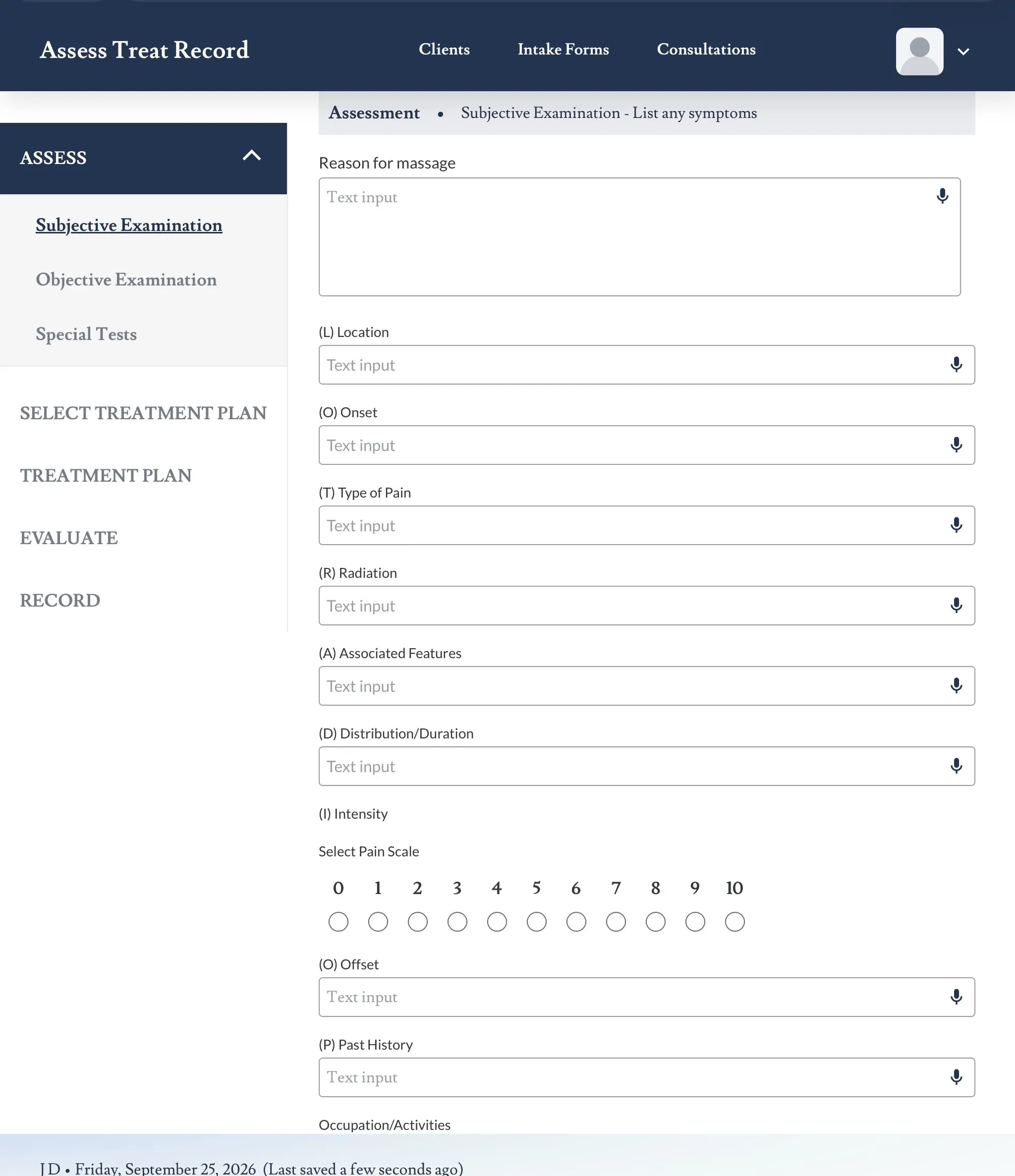
5. Review the Information
Before moving into the objective assessment, review the subjective information and make any necessary corrections or additions.
The subjective information should provide a clear starting point for the assessment that follows.
Next: Begin the Objective Assessment
After completing the Subjective Assessment, continue into the objective assessment areas that are relevant to the client’s presentation.
The next guide continues into the Objective Assessment.
Clinical Note
Only record information relevant to the consultation. Assess Treat Record provides the structure for documenting the assessment, while the therapist remains responsible for clinical reasoning and deciding which assessments are appropriate.