
1. Open the Client Record
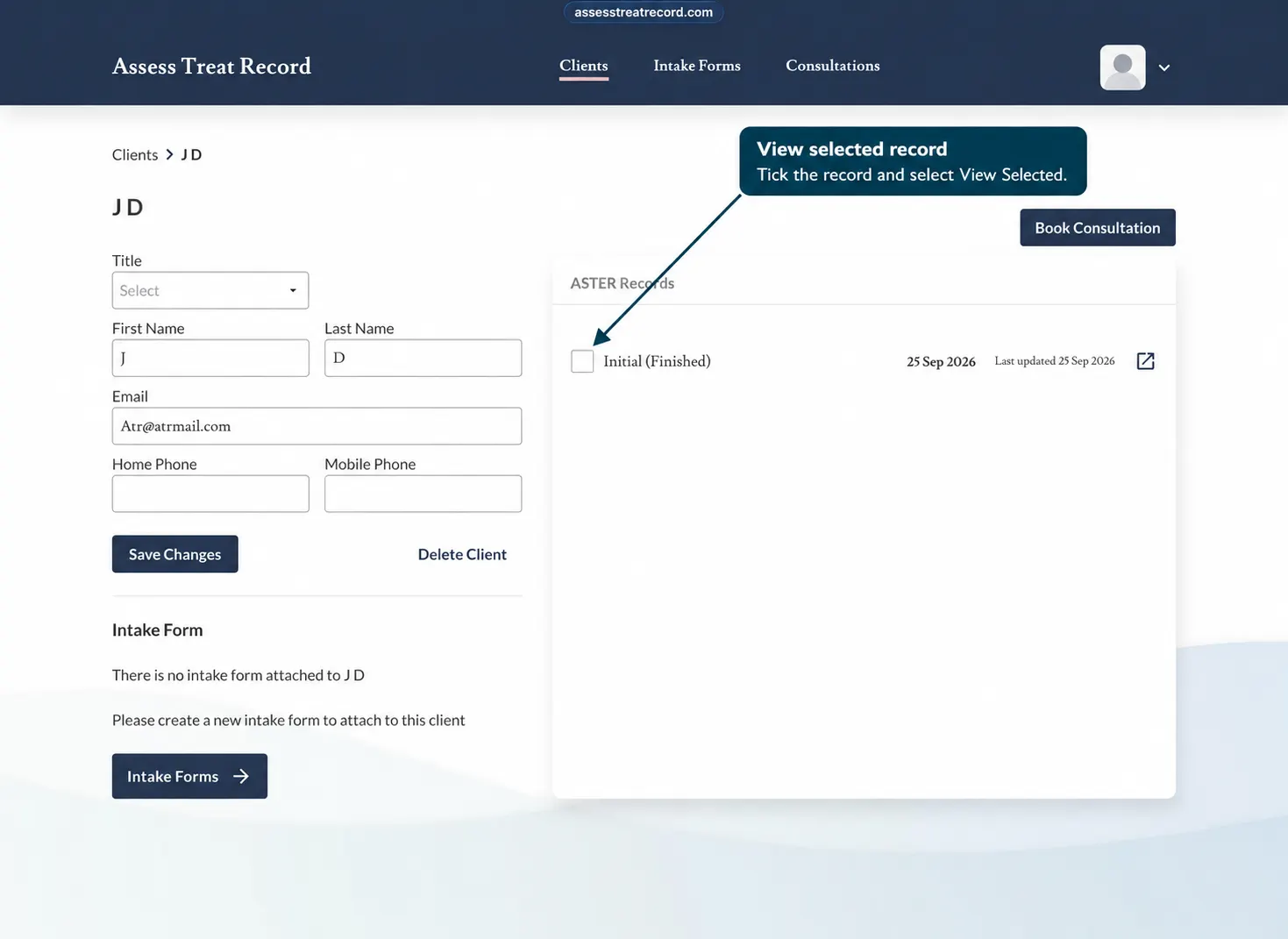
Find and open the client you are treating. The client record gives you access to their consultation history and allows you to begin a new treatment record.
2. Start a New Consultation
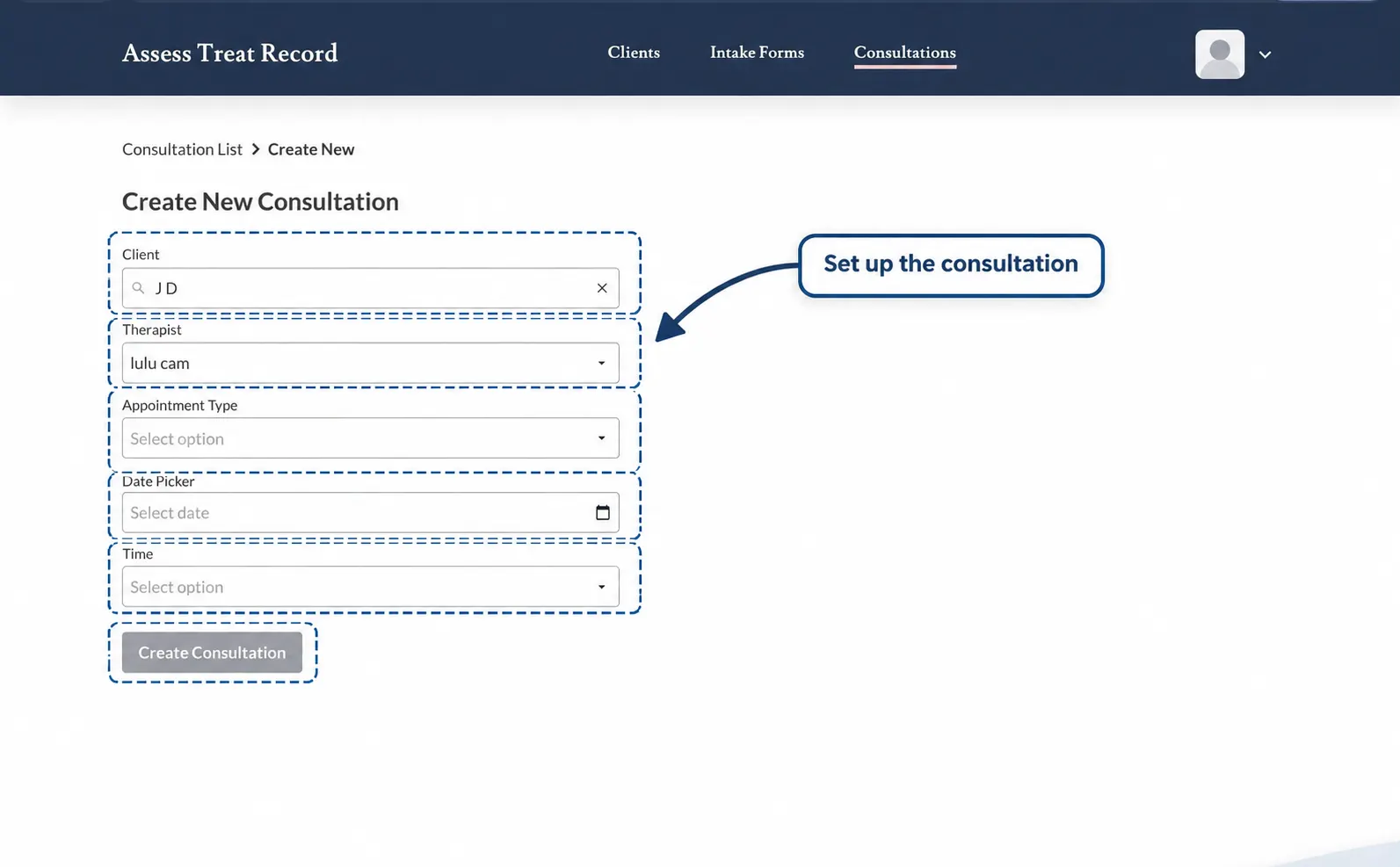
From the client’s record, select the option to begin a new consultation.
3. Begin With the Subjective Assessment
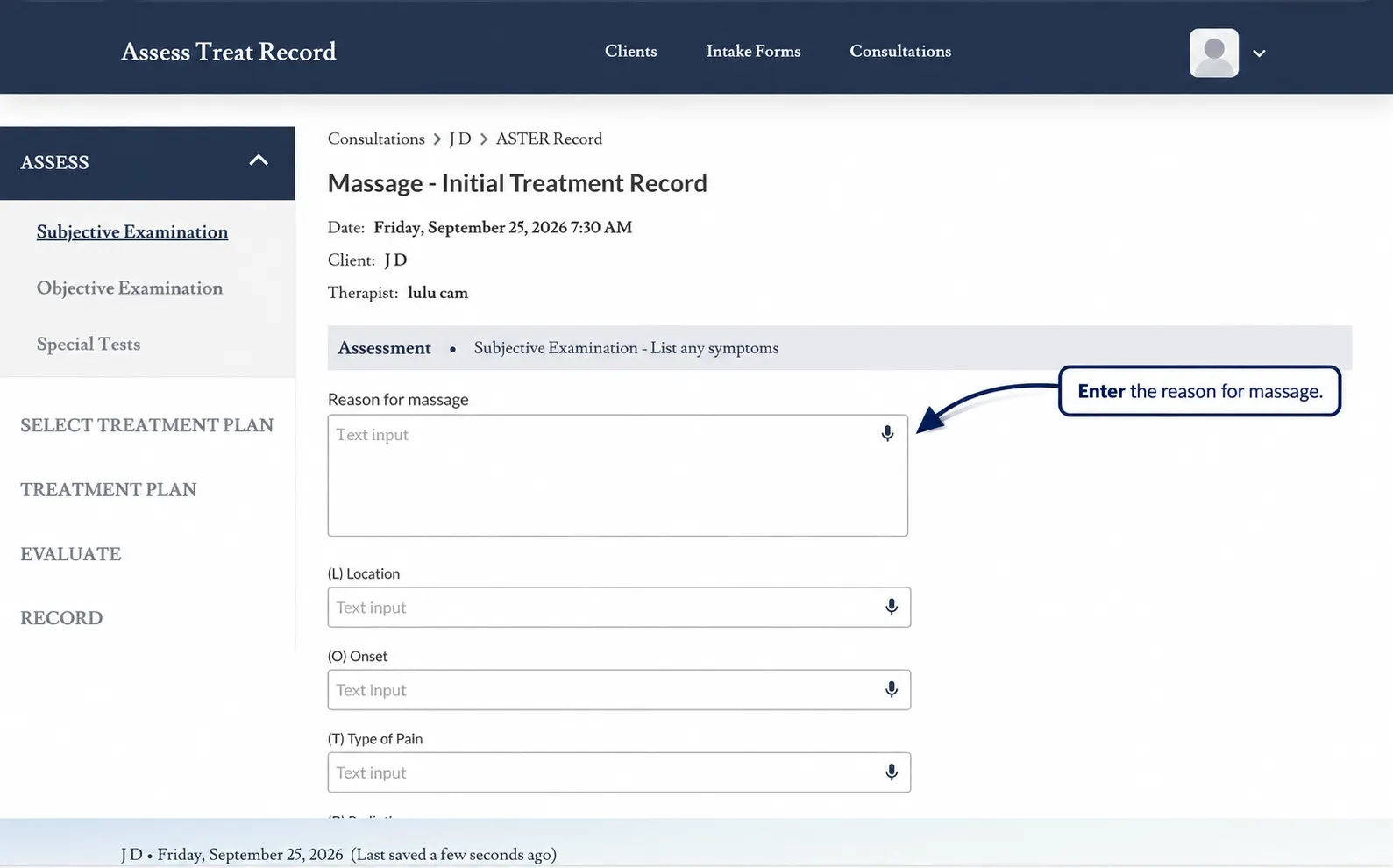
The consultation begins by recording the relevant information provided by the client about their current presentation, symptoms, concerns and reason for treatment.
Only record information relevant to the individual consultation. Keep this section brief because the next Help Centre guide will explain the Subjective Assessment in detail.
4. Continue Into the Objective Assessment
After recording the subjective information, continue into the objective assessment areas relevant to the client’s presentation.
- Posture
- Range of Motion
- Special Tests
- Relevant anatomical regions
- Muscles and muscle groups
The assessment areas relevant to each client will vary, and not all areas need to be completed for every consultation.
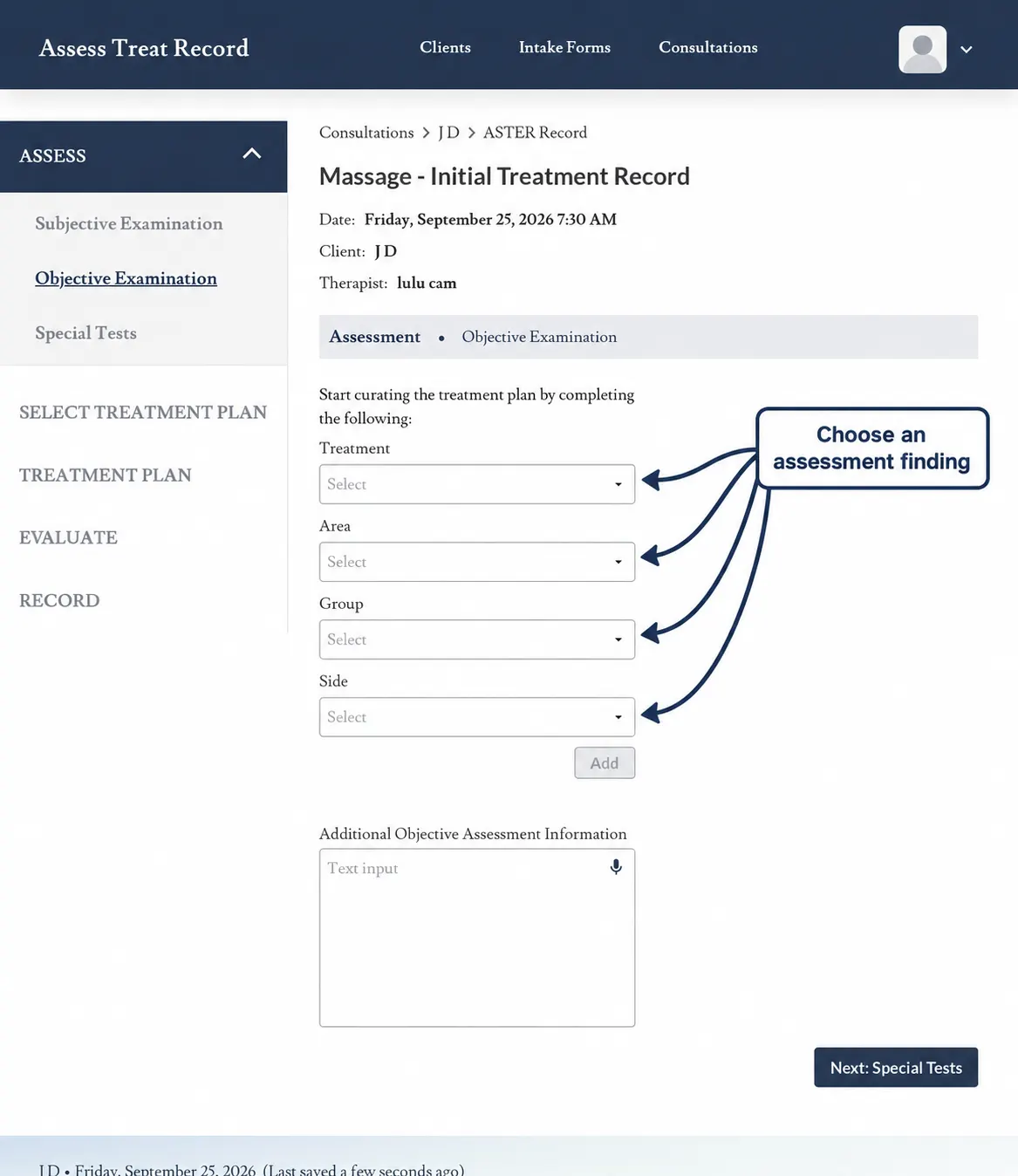
Subjective → Objective Assessment → Treatment → Reassessment → Evaluation → Aftercare → Treatment Plan
Assess Treat Record provides a structured pathway through the consultation while allowing the therapist to choose the assessments and treatment information relevant to the individual client.
Clinical Note
The therapist remains responsible for clinical reasoning and for deciding which assessments and treatment approaches are appropriate for the client.