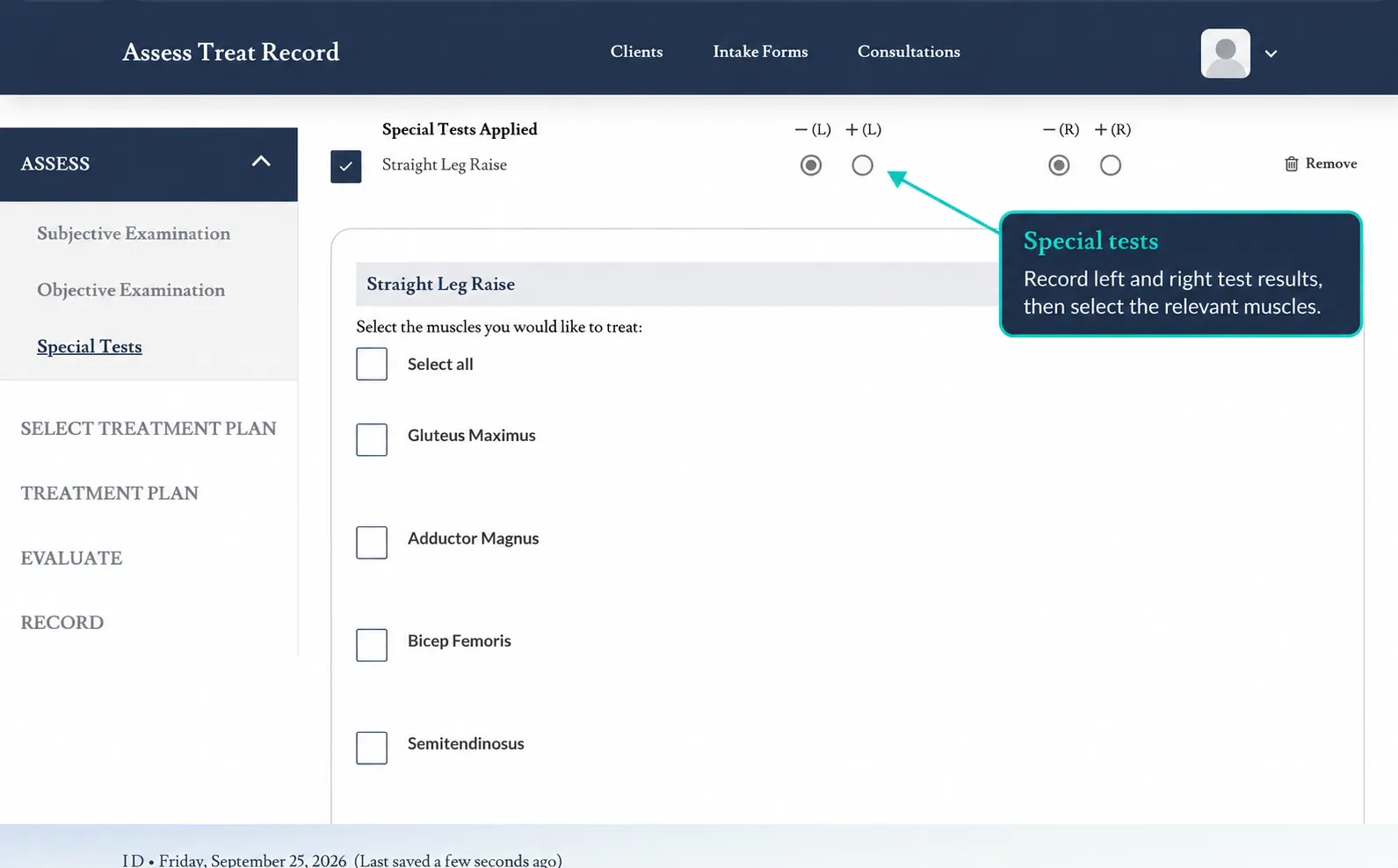
1. Complete the Relevant Assessment
Record the relevant findings in the Objective Examination and Special Tests before selecting the muscles or muscle groups associated with those findings.
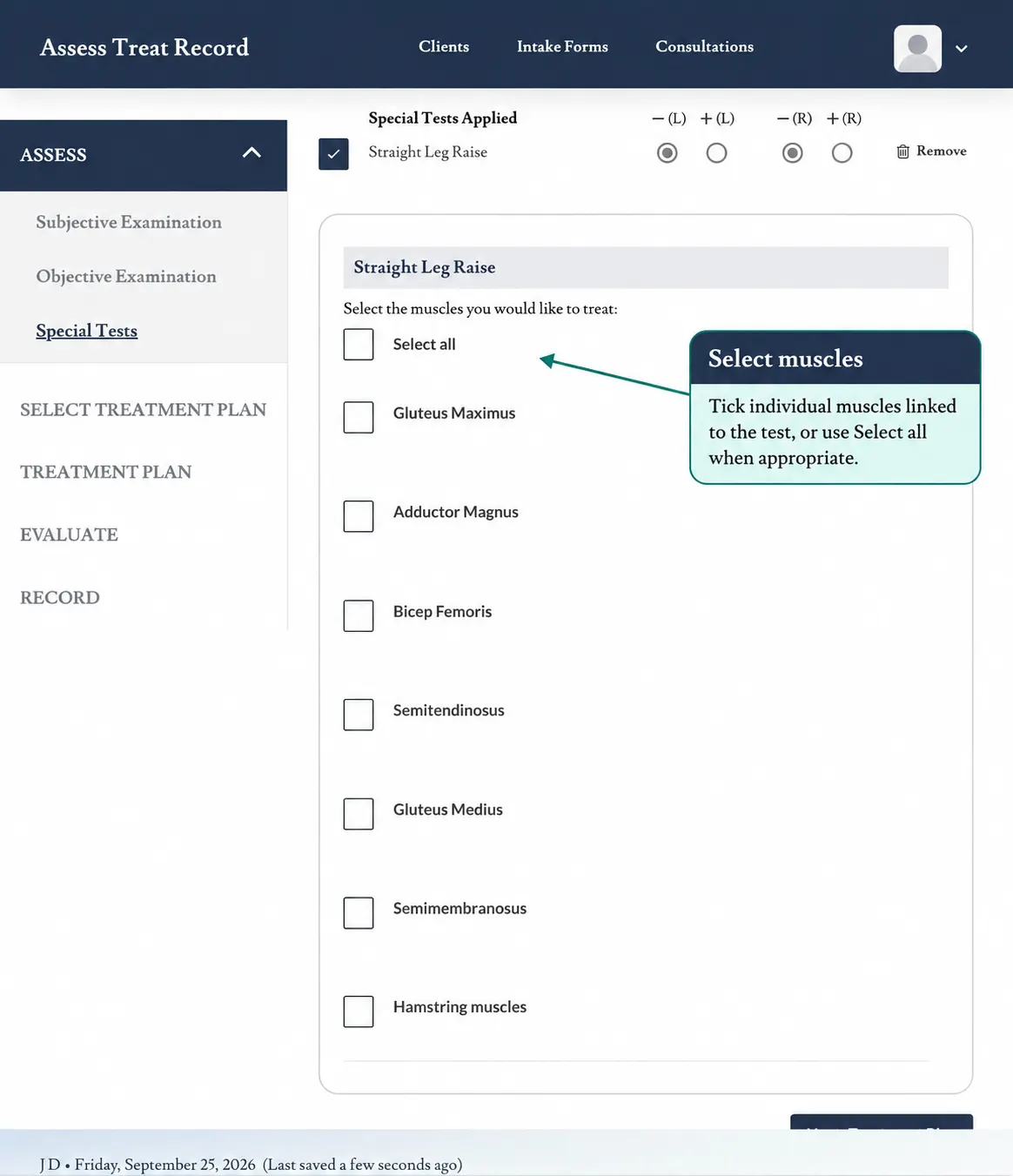
2. Select the Relevant Muscles or Muscle Groups
Based on the findings recorded during the Objective Examination and Special Tests, select the muscles or muscle groups that are relevant to the client’s presentation.
Use broader muscle groups where appropriate, or select individual muscles when more detail is required.
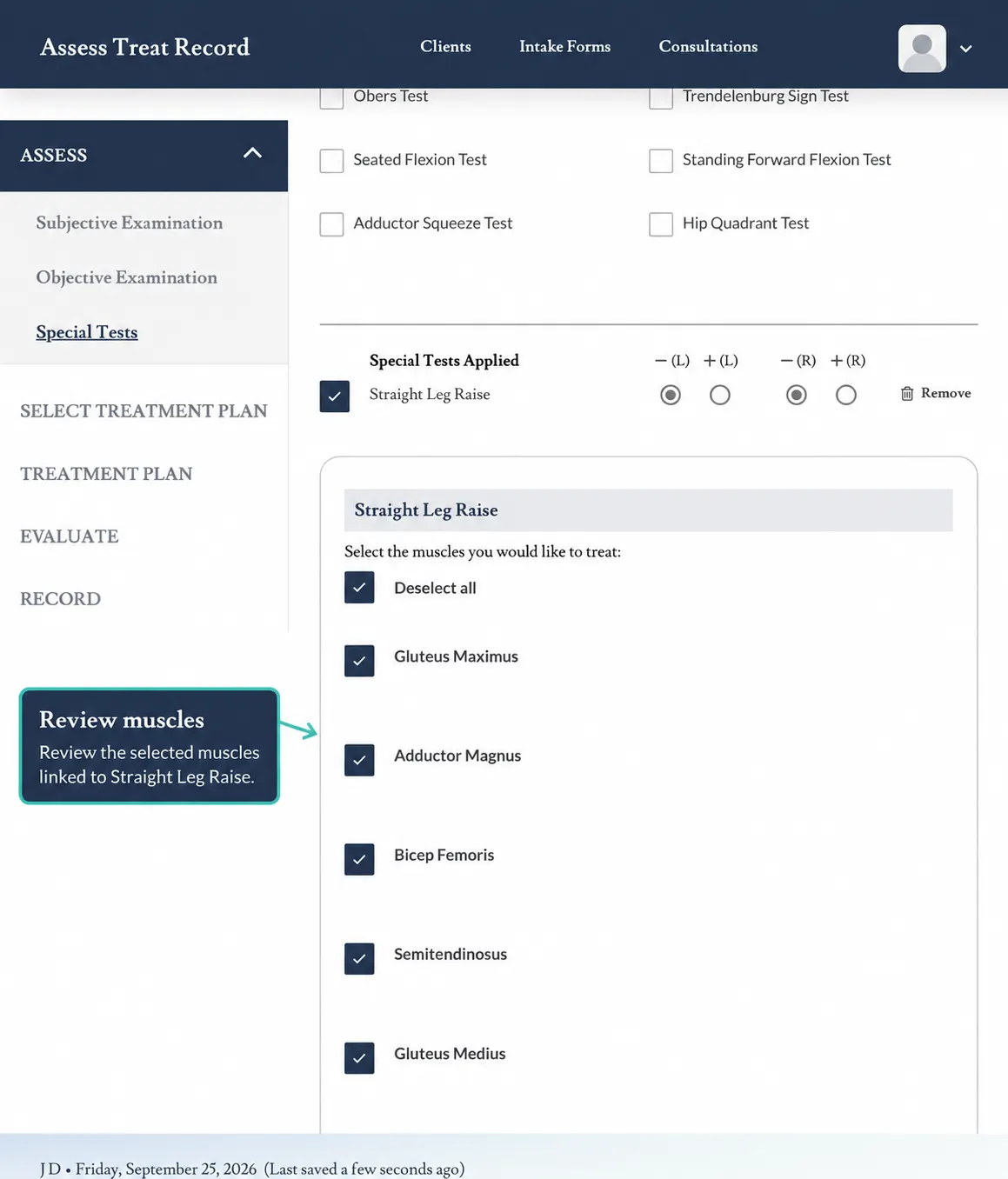
3. Review the Selected Muscles
Review the selected muscles and muscle groups to make sure they reflect the findings recorded during the assessment.
Only select the muscles that are relevant to the individual consultation.
4. Continue to the Treatment Plan
Once the relevant muscles and muscle groups have been selected, continue to the Treatment Plan.
The Treatment Plan is where the treatment techniques are selected.
Objective Examination → Special Tests → Muscles / Muscle Groups → Treatment Plan → Treatment Techniques
This creates a clear connection between the assessment findings, the muscles identified as relevant, and the techniques selected for treatment.
Clinical Note
Assess Treat Record provides a structured way to connect assessment findings with muscle selection and treatment planning. The therapist remains responsible for deciding which muscles and treatment techniques are appropriate.
Next: Create a Treatment Plan
Once the relevant muscles and muscle groups have been selected, continue to the Treatment Plan, where treatment techniques are selected.